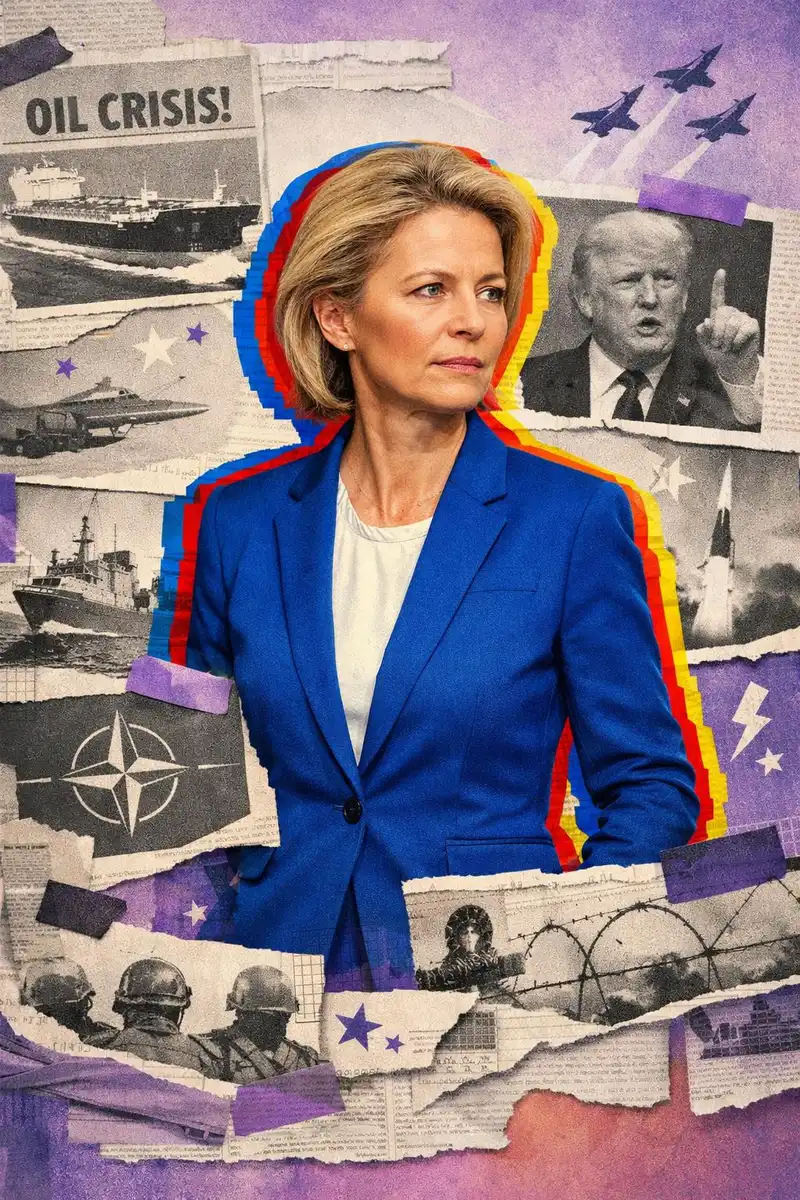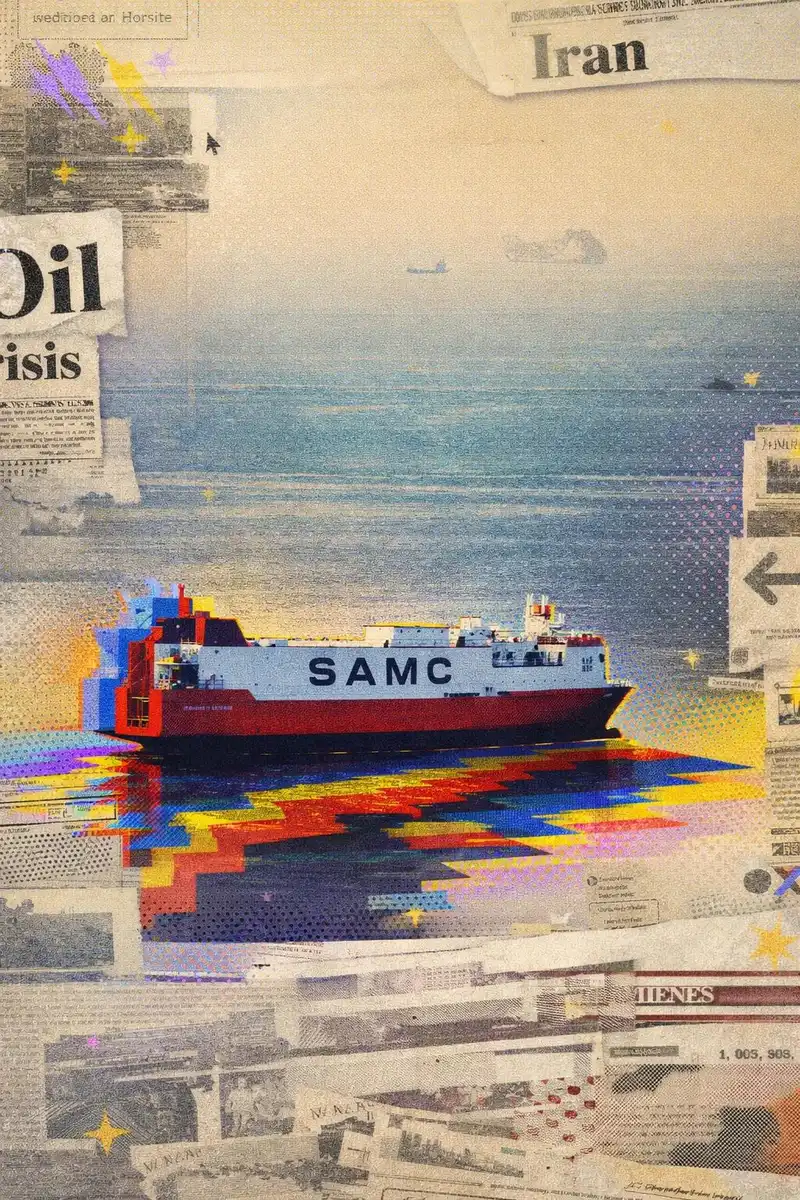
The pressure is rising, and so are the prices
Trump and the Iranian leadership both appear, at least in public, to be feeling unusually confident. That may be good for speeches. It is not so good for a shipping lane that carries a huge share of the world’s oil.
By Tuesday evening, the deadline Trump set for Iran to accept a deal was supposed to clarify the situation. Instead, the path to reopening the Strait of Hormuz remains hazy at best. Oil is already trading above $110 a barrel, and U.S. gasoline prices have climbed to an average of $4.14 a gallon, according to AAA. Without a breakthrough, they are expected to go higher. Because of course they are.
A White House spokesperson pointed back to Trump’s Monday news conference, where he said, “We have to have a deal that’s acceptable to me, and part of that deal is going to be we want free traffic of oil and everything else.”
Since Trump’s war against Iran began in late February, the president has offered several versions of how the Strait of Hormuz might be reopened. They do not agree with one another particularly well. They also range from improbable to deeply impractical. Here are the four he has described.
1. Keep bombing until Iran gives up
Trump has repeatedly threatened heavier bombing, and in the past week he has expanded those threats to include sensitive civilian and energy infrastructure. His latest warning, which gave Iran until 8 p.m. Tuesday to make a deal or face destruction, is the harshest version yet.
Just hours before that deadline, both sides looked dug in. Even people close to Trump were saying they did not know what would happen next.
Trump’s logic is straightforward, at least on paper: if Iran is battered enough militarily, it will no longer be able to threaten shipping through Hormuz. He has also acknowledged, though, that Iran does not need a full military operation to close the strait, just an armed group on shore.
Ali Vaez, the Iran project director at the International Crisis Group, says that logic does not survive contact with reality.
“There is no military solution to this challenge,” Vaez said. “The only path is a mutually beneficial diplomatic arrangement.”
Iranian leaders, for their part, continue to describe Hormuz as their main source of leverage. Mohammad Bagher Ghalibaf, the speaker of Iran’s parliament, said on Sunday that Tehran is using the chokepoint to drive up energy costs and discourage more U.S. and Israeli attacks.
“Your reckless moves are dragging the United States into a living HELL for every single family, and our whole region is going to burn because you insist on following [Israeli Prime Minister Benjamin] Netanyahu’s commands,” he wrote on X. “Make no mistake: You won’t gain anything through war crimes.”
Rich Goldberg, a former senior counselor for the Trump White House National Energy Dominance Council, argued that the public bluster should not be confused with real stability inside the regime. He said repeated strikes on regime facilities and Revolutionary Guard positions are weakening Tehran’s grip.
“At some point, economic stress and the toll it is taking is going to collapse their hold on power,” Goldberg said. “And so they probably are motivated to get to a deal.”
2. Let countries that depend on Hormuz force it open
Trump has also suggested that the United States is not as dependent on Hormuz as Asia and Europe, so those regions should step in and do something about it.
That much is partly true. Other regions are more directly dependent on the route for oil shipments. But global markets do not care much about who is technically more reliant when prices are set internationally. The result has already been painful: oil above $110, gasoline above $4 nationwide on average, and diesel above $5 on average.
So far, there has been no visible coalition of countries willing and able to force the strait open.
On Tuesday, China and Russia blocked a U.N. Security Council resolution aimed at reopening Hormuz. That proposal was already a softer version of an earlier Gulf Arab draft that would have authorized force.
Goldberg said there is still a diplomatic off-ramp. In his view, the U.S. could step back from the conflict in exchange for a halt to bombing and an Iranian pledge not to levy charges on passage through the strait. That, he said, could allow regional and Asian buyers to increase tanker traffic quickly.
“The middle ground is where the Iranians are not running the strait,” Goldberg said. “They’re not taking tolls, the U.S. is not providing a military escort, there’s no active threat on the water, no active threat in the air, and the tanker flow resumes by agreement.”
3. Wait for the crisis to end and let the strait open on its own
Trump outlined this version in a nationally televised address on April 1: “When this conflict is over, the strait will open up naturally.”
In practice, that would leave Iran with broad control over the chokepoint in the meantime, including the ability to charge for access. Bloomberg has reported that Tehran is already allowing some allied ships through while other vessels appear to be paying tolls.
That kind of arrangement would not stay local for long, said Nawaf Bin Mubarak Al-Thani, president and founder of the Council on International Mediation and a former senior defense official in Qatar.
“Build up some delayed courage, go to the Strait, and just TAKE IT,” Trump wrote on Truth Social on April 1.
Al-Thani warned on X that if Iran is allowed to monetize passage through Hormuz, other chokepoints around the world could be next.
“The issue would no longer be one strait in one region,” he wrote. “It would become a template for coercive monetization of maritime passage across the world’s most sensitive trade arteries. That is not a regional adjustment. That is systemic destabilization.”
4. The U.S. and Iran agree to manage Hormuz together
This is probably the least plausible option of the group, which is saying something.
On March 23, Trump told reporters, “Jointly controlled. Maybe me, maybe me. Me and the ayatollah, whoever the ayatollah is.” The idea appears to be that the U.S. and Iran could somehow cooperate on operations in the strait, despite the fact that the U.S. has just helped decapitate Iran’s leadership. Minor obstacle.
On Monday, Trump floated a related idea: Washington should charge its own tolls.
“What about us charging tolls?” he told reporters. “I’d rather do that than let them have them. Why shouldn’t we? We’re the winner. We won.”
It is not clear whether that idea is being taken seriously inside the administration. It is clear, however, that Iranian officials would not see it as a solution.
Greg Priddy, an energy market disruption expert who worked at the U.S. Energy Information Administration during the George W. Bush administration and is now a senior fellow at the conservative Center for the National Interest, said Tehran wants far more than an end to the bombing.
He said the Iranians are seeking reparations and asserting a right to control Hormuz.
“If we stop bombing, they’re not necessarily going to let us off the hook,” Priddy said. “They have more demands than that.”