Israel scrambles to shape the story
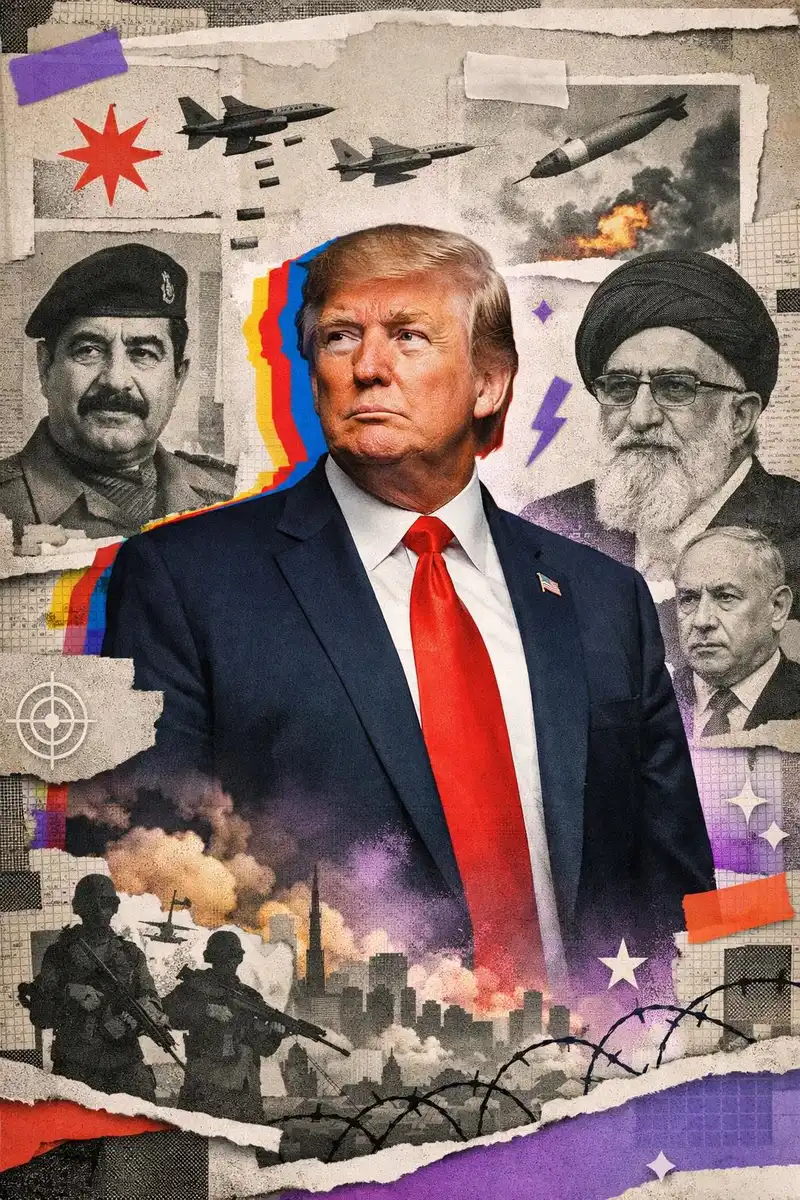
As Israel absorbs the two-week ceasefire announced by US President Donald Trump on Tuesday night in the war on Iran, the mood among its critics and enemies is blunt: Israel looks weakened, Iran is still standing, and the country’s missile stockpiles are running low. Prime Minister Benjamin Netanyahu is also facing a political backlash at home, because apparently military success is only half the job.
After news of the Pakistan-brokered truce broke, Netanyahu’s office issued an English-language statement saying the prime minister supported Washington’s decision and claiming that “Iran no longer poses a nuclear, missile and terror threat to America, Israel, Iran’s Arab neighbours and the world.”
There was, however, an important catch. Pakistan had said the ceasefire would also halt Israeli strikes on Hezbollah in Lebanon, but Netanyahu said he did not see the truce as covering Israel’s war in Lebanon. For now, at least, the United States appears willing to let those attacks continue, depending on how its peace talks with Iran unfold.
Opposition figures pile on
Netanyahu’s announcement immediately drew fire from across Israel’s political spectrum.
Yair Lapid, the opposition leader who had backed Israel’s attack on Iran, called the ceasefire one of the biggest “political disasters in all of our history.” He said Israel had not even been part of the negotiations and argued that, despite military gains, Netanyahu had “failed politically, failed strategically, and didn’t meet a single one of the goals that he himself set.” Lapid added that it would take years to undo the damage caused by the prime minister’s “arrogance.”
Others focused less on the policy and more on the presentation. Ofer Cassif of the left-wing Hadash party said he was not surprised that the announcement came in English. “Netanyahu has no interest in talking to the people of Israel. He rarely does and almost never enters the [television or radio] studio,” he said, referring to the prime minister’s habit of holding back until after the fighting had begun before spelling out his war aims in a televised address.
Cassif argued that Netanyahu knows his supporters will back him regardless, while his opponents will not budge. So when he speaks, Cassif said, it is usually for the international press and to steady his own base. Efficient, in the way political damage control often is.
The war aims were clear. The outcome was not.
Netanyahu had described Israel’s goals as stopping “Iran from developing nuclear weapons” and creating “the conditions for the Iranian people so they can remove the cruel regime of tyranny.” Those aims were only the latest version of a long-running Israeli strategy. Netanyahu has been warning since the 1990s that an Iranian bomb was just around the corner.
But after 40 days of attacks on Iran, neither objective has been met.
“The Israelis are deeply disappointed with the ceasefire as none of the original aims of the war have been achieved,” said Ahron Bregman, a senior teaching fellow in the Department for War Studies at King’s College London, who recently returned from Israel. “The Iranian regime is still in place, its ballistic missile programme could be rebuilt very quickly, and it’s still got 440kg of enriched uranium at 60 percent purity, enough for 10 bombs.”
Many observers say that, despite serious damage to Iran’s military capacity, including the loss of control of its airspace and the killing of much of its leadership and key military figures, Tehran has come out of the conflict in a stronger position than it entered it.
“Israel and the US had many tactical gains. They won militarily, but, strategically, Iran is the clear victor,” Bregman said.
Why the Strait of Hormuz matters
One of Iran’s major gains was simply surviving the barrage of Israeli and US strikes. Another was its move to close the Strait of Hormuz, one of the world’s most important energy routes. Under the current negotiations, safe passage for international shipping is now being handled by Iran and neighboring Oman.
Iran has been under heavy US sanctions ever since Trump, with Netanyahu’s encouragement, pulled out in 2018 from the international agreement meant to curb Tehran’s nuclear programme in exchange for sanctions relief. Even so, many analysts now expect Iran to keep charging newly imposed fees on ships seeking safe passage through the strait. Trump’s own Wednesday posts on Truth Social, promising future sanctions and tariff relief as part of the ceasefire deal, were also seen as helping to support the Iranian economy.
“Iran’s decision to block the Hormuz pushed Trump off balance, and he never recovered,” Bregman said. “Future historians will regard this Iranian decision as the turning point in the war.”
The backlash at home and the boost to Tehran
Some critics also say Israel’s actions have strengthened the very government it wanted to weaken.
Opposition hubs such as Tehran’s Sharif University, which had been a center of anti-government protests in January, were hit in Israeli strikes. Trump’s last-minute threat to wipe out Iranian civilization also handed Tehran a powerful propaganda gift, allowing the government to broadcast images of citizens forming human chains around critical infrastructure.
“Please understand, I despise the Iranian regime; it’s murderous,” Cassif told Israel’s Knesset on Wednesday. “But we [Hadash] had warned from second number one that we didn’t have the right, or the ability, to change it. Instead, we’ve strengthened the support for that regime at the expense of the opposition.”
He added that Israel and the United States had “given operational control of the Strait of Hormuz to Iran, which had never been an issue before, and, with the first aggressions coming while negotiations were under way, signalled to the entire world that they can’t trust the US and Israel.”
Lebanon remains the unresolved front
The war is not only about Iran. Israel’s strikes in southern and eastern Lebanon, where it says it is targeting Hezbollah positions, are still ongoing, and it remains unclear whether they will continue.
Israel is not expected to take part in peace talks in Pakistan on Friday. Still, Bregman said that is where the question of whether it can keep attacking Lebanon may be decided, with the US and Hezbollah’s allies in Tehran likely to shape the outcome.
Alon Pinkas, a former Israeli ambassador and consul general in New York, said that if the ceasefire lasts beyond its two-week window, Israel may have gained very little that it can point to.
“Assuming the ceasefire holds beyond the two-week period, Israel achieved almost nothing tangible,” he said. “Iran upended the strategic asymmetry by both attacking the Arab Gulf states and, crucially, shutting the Strait of Hormuz with almost no pushback from China. Israel is increasingly perceived as a destabilising force and, arguably, strained the US relationship since all promises Netanyahu made to Trump unravelled.”
Cassif had a shorter verdict for the whole episode: “It’s crazy.”