Echoes from one war to the next
When the United States and Israel launched their war on Iran on February 28, they urged Iranians to rise up. Then the bombs started falling on far more than military positions. Civilian homes, universities, schools, hospitals, commercial sites, and historical landmarks were hit too. A familiar pattern, apparently, still gets misfiled as strategy.
For many Iranians, the noise overhead has revived memories of the Iran-Iraq war of 1980 to 1988. The comparison is not abstract. It is lived memory, and in some cases, painful muscle memory.
In the autumn of 1980, Iraq invaded Iran. The author of this account was 20 years old, studying at Tehran Polytechnic University and active in an opposition group. The first direct encounter with war came in October.
He and his friend Farhad were standing in line, preparing to load two boxes of anti-government pamphlets onto a bus bound for Isfahan. Because movement was restricted and the Revolutionary Guard had set up checkpoints, that was the safest way to move such materials.
Then came the air-defense fire. The blasts shook the ground. The night sky flashed blue, orange, yellow, and red. Sirens followed. Fear, confusion, and helplessness took over. He describes running in search of shelter while the earth trembled beneath him, air defenses kept pounding the sky, and panicked cries spread through the crowd. There was no clean understanding of what was happening, only the blunt fact that something terrible was.
Once the firing stopped, he and Farhad got onto the motorcycle and returned to their neighborhood. His mother had already assumed he had been killed. A perfectly reasonable conclusion in a city under attack.
A few weeks later, he experienced the war again. This time, he was in a park in central Tehran with another friend, discussing how to oppose the war and organize against the regime at the same time.
An Iraqi fighter jet then appeared at very low altitude, low enough that they could see the pilot. People scattered. The aircraft circled and dropped leaflets written in Persian, urging Iranians to rise against their own government. The message, in effect, was simple: overthrow your rulers and the bombing will stop.
He and his friend understood the offer for what it was. Saddam Hussein was trying to seize Iran’s internal conflict and turn it into a shortcut for victory. They had no illusion that Iraqi planes were arriving as instruments of liberation.
The old gamble
Inside the Iranian opposition, people argued about whether those opposed to the Islamic Republic should join the country’s defense against Iraq or use the invasion as an opening to intensify the anti-regime struggle. The author says he belonged to the second camp. He saw the war as an opportunity to bring down the state.
That assumption turned out to be spectacularly optimistic. The Islamic Republic was only about a year old, but it still enjoyed broad public support. The idea that bombing cities would make the public overthrow its government was fantasy, and not a particularly durable one. Saddam Hussein learned quickly that the post-revolutionary state, chaotic as it was, could mobilize millions to defend the country and preserve its grip on power.
So did the opposition.
The state not only rallied people against the invasion, it also used the war to tighten control at home. Tens of thousands were arrested. Many more were forced into exile. Thousands were executed. Even opposition figures who supported the defense of the country but remained critical of the government were purged or driven out. War, as ever, proved to be a great simplifier for the people in charge.
The new war and the old illusion
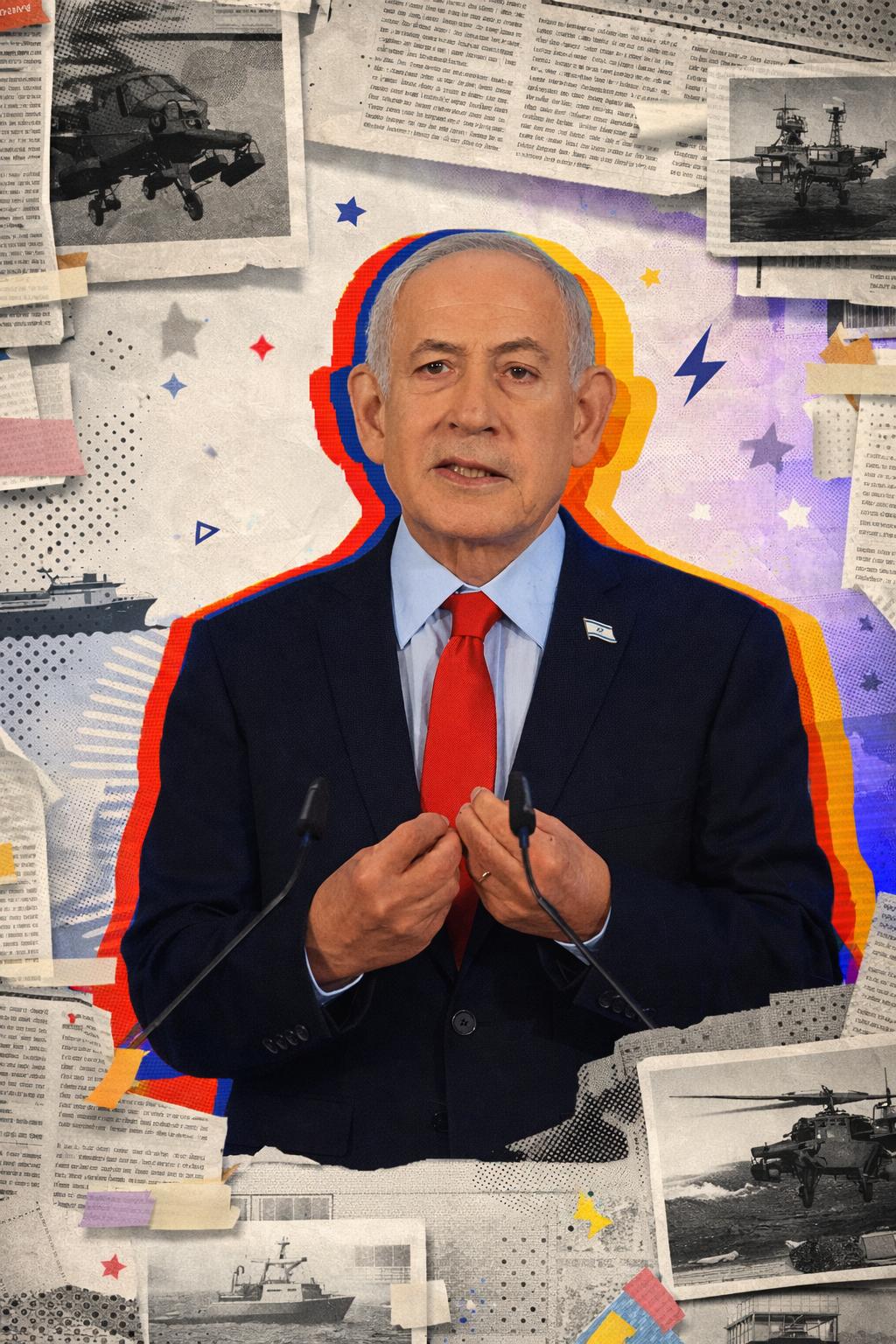
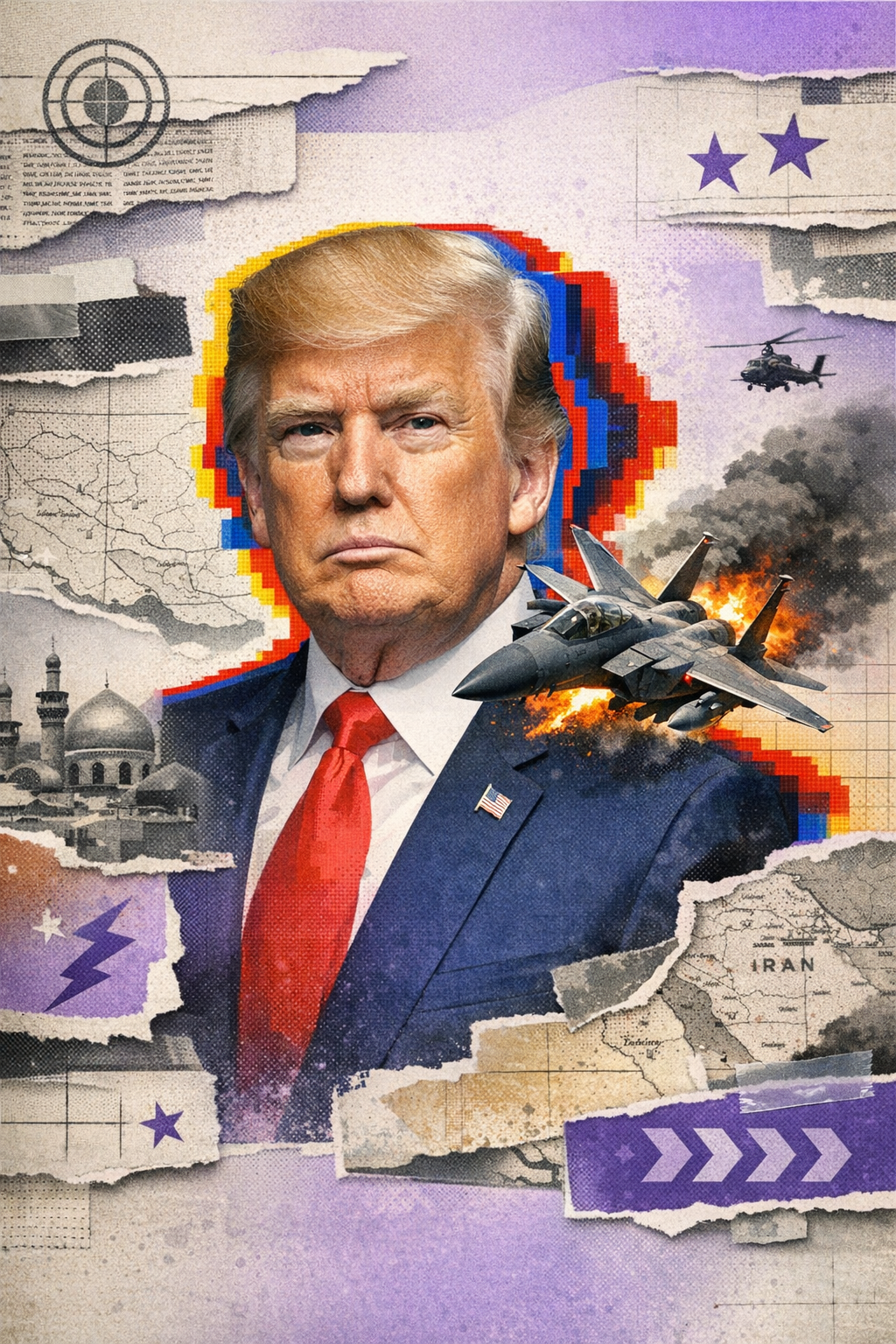
Forty-six years later, the argument from Washington and Jerusalem looks disturbingly similar. The difference is that Donald Trump and Benjamin Netanyahu are waging an air war without a traditional front line or soldiers on the ground. That makes the uncertainty worse, not better. When the sky is the battlefield, anyone, anywhere, can become a target. Air wars have a way of being less discriminating than the people who sell them like they are some neat surgical instrument.
There is another major difference. By the time this latest war began, the Islamic Republic had already burned through much of the support it once possessed. Years of sanctions had deepened poverty across social classes. Corruption remained embedded in the economy. Brutal repression widened the gap between the state and much of the population. The relationship was already badly broken.
Even so, that did not mean foreign bombing would topple the regime with any elegance or speed. The Trump administration, the article argues, badly misread Iran and signed on to an Israeli plan built on the same basic assumption as Saddam Hussein’s earlier gamble: bombard the country enough and the government will collapse.
That assumption failed in two distinct ways.
First, it misunderstood how power actually works in Iran. The Islamic Republic is not simply a one-man tyranny waiting to collapse if someone cuts off the head. Yes, the supreme leader holds vast constitutional authority over all three branches of government. But the system also contains multiple centers of power, and those institutions collectively hold the political order together. That is not an especially comforting design, but it is a real one. Assassinating Ayatollah Ali Khamenei, then, would not necessarily end the regime. It would more likely add a war crime to the list of bad ideas.
Second, the war ignored a basic political reality: indiscriminate bombing tends to blur the line between the state and the nation. Very quickly, many Iranians came to see the assault not as a response to their complaints about the government, but as an attack on national sovereignty itself.
Israeli and American messaging tried to pin the blame on the Islamic Republic and its regional behavior. Yet punishing the population for the state’s actions did not land as moral clarity. It landed as collective punishment. Most people, unsurprisingly, were not eager to applaud their own destruction.
A very familiar recipe
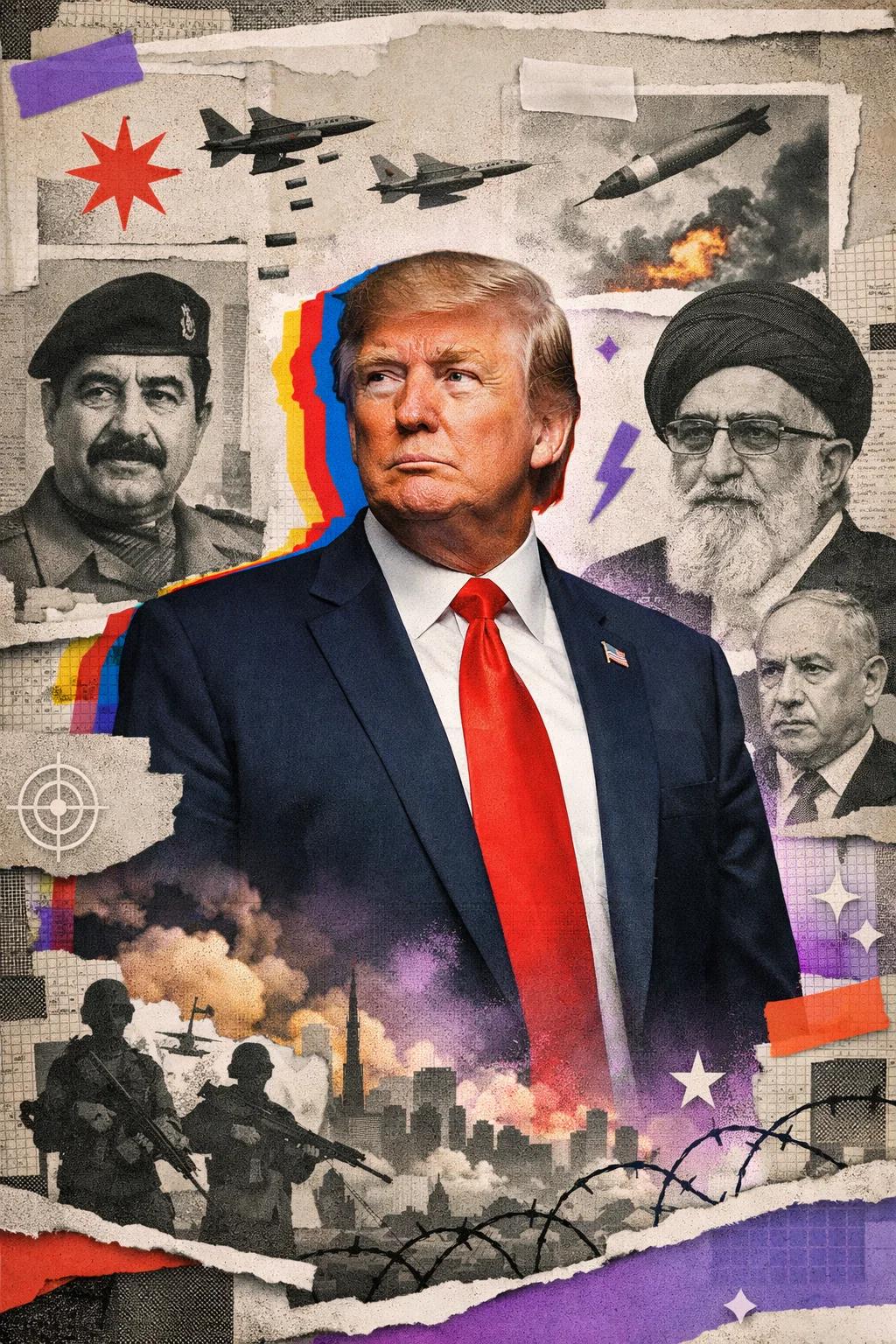
Like Saddam Hussein in the 1980s, the Trump-Netanyahu alliance is said to believe that bombing the country can create conditions for Iranians to overthrow the Islamic Republic themselves. The method is crude, but consistency has never been the strong suit of such projects: punish the population with bombs, sanctions, and assassinations, then expect gratitude when the government falls. A bold theory. A weak track record.
The people running through a bus terminal in 1980 and the people seeing their lives shattered by Israeli and American strikes today are living through the same basic logic. They hold the people who pressed the button responsible for the deaths, injuries, and wreckage. They do not confuse them with liberators. Sensible of them.
The immediate effect of this kind of war is not national emancipation. It is greater militarization of the state and the shrinking of what remains of civil society. The Islamic Republic, having inherited the habits of the eight-year war with Iraq, is well equipped to survive a war of attrition. But survival comes with a cost. Defending against foreign attack often means consolidating power and tightening repression. That is usually how wartime resilience works when you are not the one under the bombs.
A war with a bad start and a wider consequence
This conflict began on false assumptions and continues to violate basic principles of the international order. As in 1980, the United States and Israel have openly brushed aside the United Nations principle of respect for sovereignty. They have also ignored the ban on assassinating political leaders. Now there are threats against Iran’s civilian energy infrastructure, which would amount to a clear war crime.
No one can say with confidence how this war will end, or who will claim victory when the smoke clears. What does seem clear is that it is already pushing the region toward a different order entirely. Whether that order is better is another matter, and one that current events are doing little to answer.