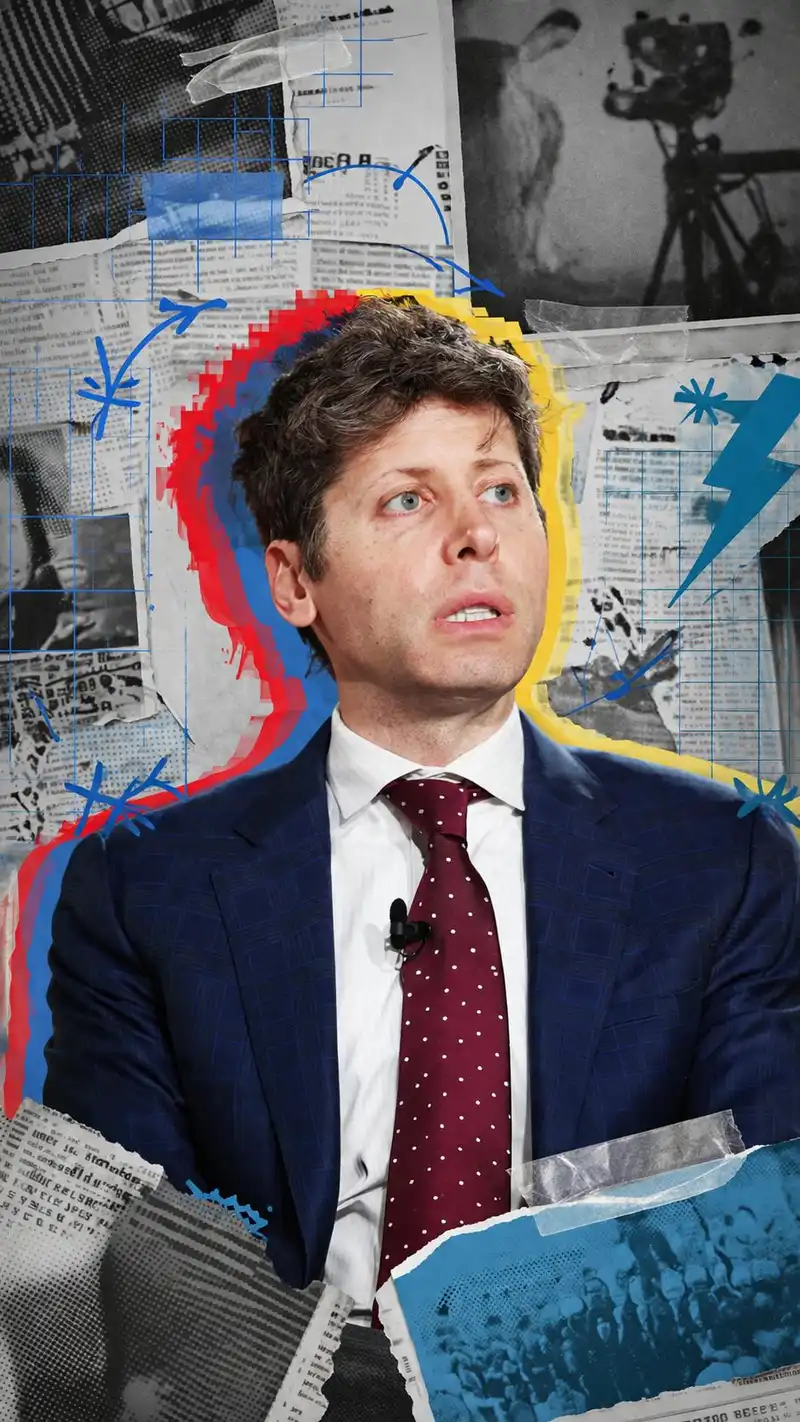
A company with a very large spotlight on it
OpenAI is in the awkward position of looking enormous and fragile at the same time, which is quite a trick when you are also the most closely watched company in artificial intelligence.
Just over a week ago, the company closed a $122 billion funding round at a $852 billion post-money valuation. It is also reportedly preparing for a possible IPO later this year. Meanwhile, ChatGPT has long since crossed into the kind of brand recognition where people use its name like a generic term for consumer AI, which is a nice problem to have until everyone starts asking what happens when the momentum slows.
In recent months, though, a string of executive changes, shelved products, and public messiness has raised a harder question: how stable is OpenAI, really, and how long can it stay ahead?
A run of controversies, one after another
The current stretch of bad optics began earlier in the year. At the end of February, OpenAI agreed to what was described as an expansive Pentagon contract, after competitor Anthropic declined a similar deal over concerns about autonomous weapons and domestic mass surveillance.
That move sparked criticism inside and outside the company. Even CEO Sam Altman later conceded that OpenAI had come across as "opportunistic and sloppy." Not exactly the sort of phrase companies like to keep on their own internal highlight reel.
Then came the product reversals.
Last month, OpenAI said it would discontinue Sora, its AI video-generation app that had been slated to fold into ChatGPT. Around the same time, it abruptly exited a Disney partnership, so abruptly that reports said the two companies had been working together for another 30 minutes before Disney learned the deal was being shut down.
OpenAI also shelved long-running plans for ChatGPT to be able to sext with users. And as the company shifted its attention toward enterprise and coding tools, OpenAI executive Simo reportedly told employees, "We cannot miss this moment because we are distracted by side quests."
Even the company’s much-hyped Stargate data center project may have stalled substantially.
The C-suite keeps moving
Last Friday brought yet another round of executive reshuffling.
- Fidji Simo, OpenAI’s CEO of AGI deployment and, until recently, CEO of applications, is stepping away from her role "for the next several weeks" because of medical leave.
- Greg Brockman, OpenAI’s president, is stepping in to run the product organization and the company’s super app effort.
- Kate Rouch, the chief marketing officer, is leaving to focus on her health.
- Brad Lightcap, formerly OpenAI’s COO, is moving into a new role "focused on special projects" and will report directly to Altman.
It is not the kind of lineup that screams calm continuity. It is the kind of lineup that suggests everyone is reorganizing while the building is still moving.
At the start of this week, a New Yorker report added fuel to long-running claims that Altman may have misled OpenAI’s board, former company executives, and even people he worked with before co-founding OpenAI.
Later this month, the company is also due to defend itself in a potentially messy court fight with cofounder Elon Musk, whose lawsuit has already surfaced a large amount of internal communication from OpenAI’s early days.
Rewriting the communications playbook
OpenAI’s recent answer to all this scrutiny has been, at least partly, to get more aggressive about its own narrative.
Last week, the company said it was acquiring TBPN, the online viral news show. Simo said the deal was meant to "help create a space for a real, constructive conversation about the changes AI creates, with builders and people using the technology at the center." She also wrote, "As I’ve been thinking about the future of how we communicate at OpenAI, one thing that’s become clear is that the standard communications playbook just doesn’t apply to us."
That is one way to describe it. Another is that the company seems to have concluded that conventional PR rules are not much help when the whole world is already watching every move.
Profit pressure is no longer theoretical
The bigger issue is that OpenAI now has to make the numbers work.
As billions continue to pour in from investors, the pressure on the balance sheet is growing. CFO Sarah Friar has reportedly raised concerns that the company is not ready to go public as soon as Altman wants.
There is also much more urgency around revenue. OpenAI reportedly did not expect to become profitable until 2029, according to 2024 reporting. At the company’s annual Dev Day in October, Altman told reporters, "Obviously, someday we have to be very profitable, and we’re confident and patient that we will get there."
Later that same month, he sounded more combative on a podcast when host Brad Gerstner challenged him over the gap between revenue and massive spending commitments. Altman cut in to say, "First of all, we’re doing well more revenue than that. Second of all, Brad, if you want to sell your shares, I’ll find you a buyer. I just... Enough."
By December, Altman reportedly declared a "code red" as competition around ChatGPT intensified.
What comes next
Now the company is trying to direct its computing power toward projects with the best profit potential. That includes catching up to Anthropic, which has been gaining attention in coding, while also keeping pace with Google, where Gemini benefits from being deeply embedded across the company’s apps and tools.
OpenAI may still find a way to pull ahead. It has a habit of doing that. But the recent run of reversals, departures, and defensive public messaging suggests the path may be less smooth than Altman would prefer.
And with an IPO possibly coming into view, smooth would be very helpful.