A city guarantee for an international institution
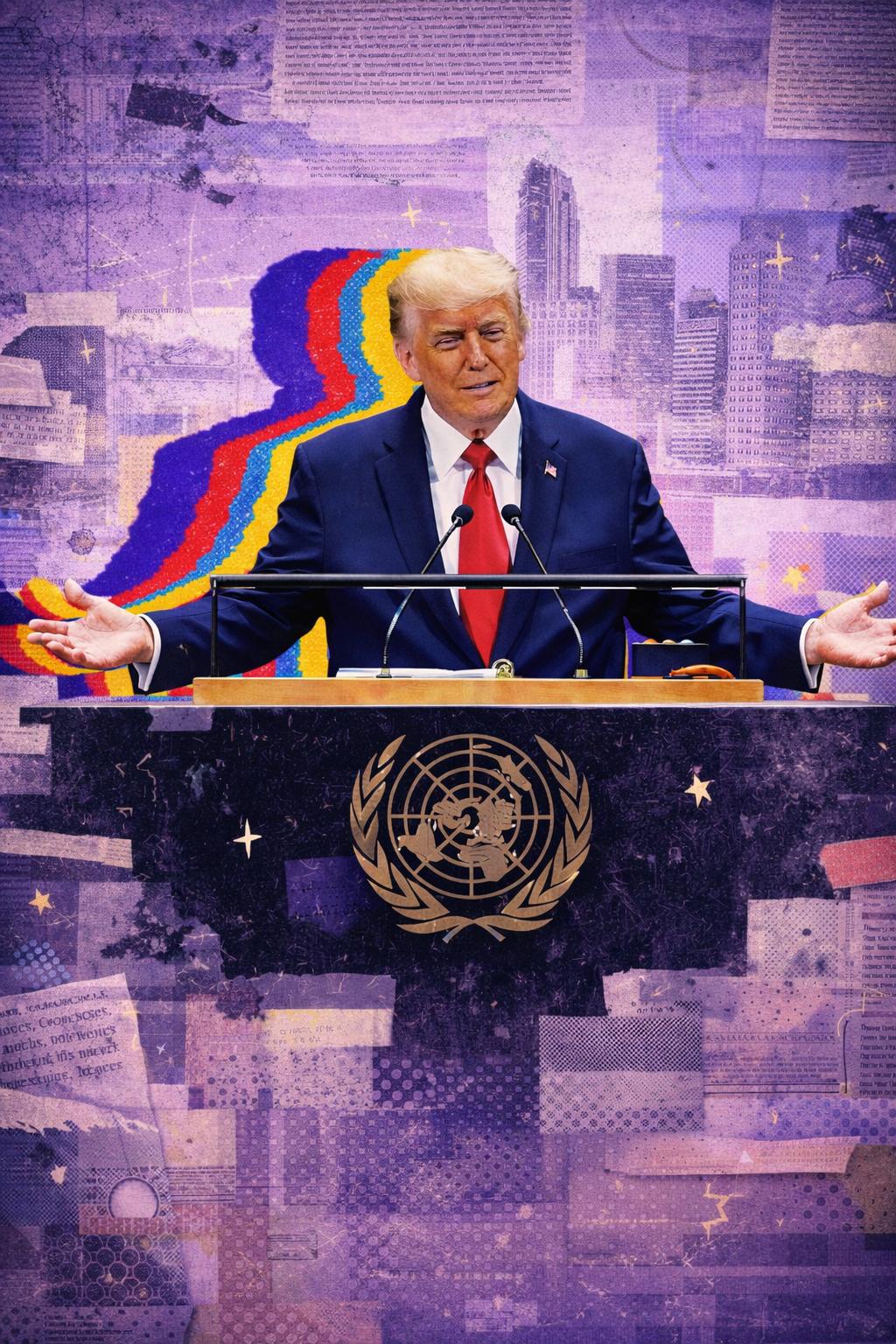
A barely noticed public entity created in 1968 to help international agencies lease office space is now sitting at the center of a very expensive problem. Last year, the United Nations Development Corporation issued a $365 million bond to pay for renovations at 1 and 2 U.N. Plaza, the office buildings beside U.N. headquarters.
To make the financing work, the Adams administration agreed to stand behind the bond for up to $25 million a year by taking over and paying for any space left empty. In plain English, if the U.N. stops paying rent, New York City could end up covering millions of dollars annually. Because the city clearly did not have enough other things to budget around.
That risk lands at an awkward time. The city is already dealing with a $5.4 billion budget gap, which is making it harder for Mayor Zohran Mamdani to carry out the progressive agenda he campaigned on.
Why the city is worried
The U.N. has long been more than a diplomatic address for New York. It is a major tenant, a source of jobs, and a symbol the city likes to keep within reach. But the usual assumptions are getting shakier.
U.N. agencies have been steadily moving staff out of the United States because it is expensive to keep them here. Other countries are trying hard to attract that work instead. One U.N. affiliate recently announced it was shifting 400 employees from New York to Madrid and Bonn, Germany.
That is not exactly the kind of news that makes local officials sleep better.
Former New York Rep. Carolyn Maloney, who sits on the development corporation’s board, said that if the U.N. ran out of money, it would amount to a “crisis” and that New York’s congressional delegation should try to get President Donald Trump to pay.
“It’s not only for the U.N., it’s for the economy of New York City,” she said.
The development corporation issued the bond partly to keep U.N. agencies happy and in place. The space at 1 and 2 U.N. Plaza is being leased to them at $51 per square foot, which is well below market rates in Manhattan, where nothing is cheap except the optimism.
Rob Cole, the corporation’s executive vice president and general counsel, said the city agreed to step in if the U.N. defaulted because of how important the organization is to New York.
“We were in a very rough real estate market, and with uncertainty in commercial estate, the city stepped up,” he said.
A U.N. spokesperson, Farhan Aziz Haq, said in an email that the organization “we honor all our legal obligations and will continue to do so.”
Washington’s fight, New York’s concern
Trump told POLITICO in February that he had not realized the U.S. was behind on its commitments to the U.N., but said he could “solve the problem very easily” and get other countries to pay, if only the U.N. would ask.
That is the federal theory. In New York, the reaction is more practical: what happens if the money does not show up?
Mamdani’s team is already watching closely. After a report that Secretary-General António Guterres and his team were threatening to shut down the U.N.’s New York headquarters, Cole said the mayor’s office of management and budget called the development corporation to ask questions.
Mamdani also met with Guterres in person on Tuesday.
In a U.N. readout of the meeting, Guterres thanked the mayor for an “outstanding relationship and support received from the host city,” though notably not the host country. That detail may have been accidental, but it was also very on brand for the moment.
Why New York officials still see the U.N. differently
The U.N. is often a political target in Washington, where it is easy to treat international cooperation as a hobby people have not yet outgrown. In New York, mayors tend to see it differently, as both a prestigious institution and a major employer.
A city economic impact report from a decade ago estimated that the U.N.’s presence generates $3.7 billion in annual economic activity and supports 25,000 jobs.
Mamdani has also reshaped the city’s international affairs office. In February, he replaced commissioner Aissata M.B. Camara with Ana María Archila, a former leader of the Working Families Party and the immigrant-rights organization Make the Road New York.
Archila joined Mamdani during Tuesday’s meeting with Guterres. She said the mayor spent the whole conversation offering help to the U.N. and described the two men as kindred spirits.
“There’s obviously the contrast with the federal government,” she said. “Some of the problems, the root, it’s not in our control. When the powerful states are not making their contributions, it creates a financial crisis that is inevitable.”
A move away from New York still looks unlikely
For all the anxiety, a full U.N. departure from New York does not seem imminent.
Former City Councilmember Joe Borelli, a Republican on the development corporation’s board, said it takes 190 nations to change a lightbulb at the U.N.
“The idea that it’s going to pick up and move to another country next year is as far from a prospect as world peace,” he said.
Mamdani has also appointed Emerita Torres, a Bronx Democrat and former diplomat, to lead the development corporation.
Torres replaced George Klein, a real estate developer who served on the board for 54 years. Klein was first appointed by Gov. Nelson Rockefeller, then reappointed by Mayor Rudy Giuliani and every mayor since, until he stepped down in December.
At the corporation’s first full meeting since Klein’s departure, the board honored him as he appeared in the agency’s East Side conference room to give what sounded very much like a farewell address. Klein said he had spoken with Torres earlier in the week and offered her one key piece of advice:
“Stay away from the press.”
Immediately after that, a staffer made sure to note that a reporter was in the room. A small reminder, if one were needed, that even in diplomatic circles, someone is always keeping score.