The NBA’s award season is almost here
The NBA regular season, the league’s marathon of 82 games, is nearly over. That means the league is getting ready to hand out its major individual awards in a few weeks: Defensive Player of the Year, Rookie of the Year, Most Improved Player, Clutch Player of the Year, and, above all, the MVP.
MVP stands for Most Valuable Player, and in the NBA it is the prize that identifies the season’s best overall player. In a league this competitive, winning it is not easy. The list of winners reads like a who’s who of basketball history, which is convenient for everyone involved and mildly inconvenient for anyone trying to argue that the award is just another trophy.
The MVP also matters in a more practical way. In North American sports, these awards have real financial weight, because winning one can help a player earn more money. Apparently being excellent is not enough if it does not also show up on a contract somewhere.
A new rule, and a very familiar headache
This year’s MVP race is especially tight, and it is made even messier by a rule the NBA introduced a few years ago to encourage teams to play their stars more often, even in games that feel less important than they should.
Since 2023, a player must appear in at least 65 regular-season games to qualify for most individual awards. At least 63 of those games must include 20 minutes of court time, and at least two more must include 15 minutes. The rule was agreed on by the league and the players, but many people still think it is unfair and hard to justify.
The problem is obvious. A player can miss a couple of months because of an injury that is serious, but not catastrophic, and suddenly be shut out of the award race entirely. The rule punishes absences without much interest in why they happened, which is a bold way to handle a sport where bodies tend to break down.
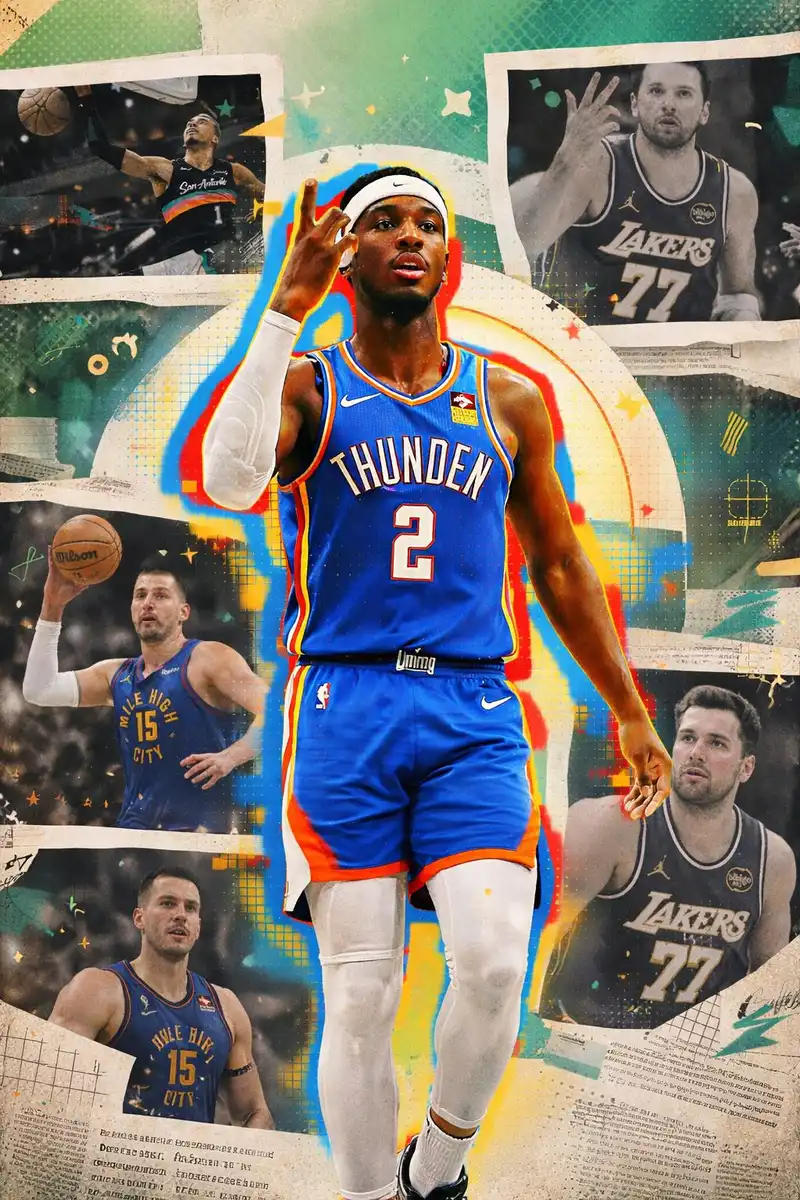
That is exactly what is happening now. With two or three games left for each team, only one of the main MVP contenders has met the requirement so far: Shai Gilgeous-Alexander. Nikola Jokic is at 63 games, Victor Wembanyama at 64, and Luka Doncic will not get past 64 because of an injury, although he plans to appeal.
How the MVP vote works
The first NBA MVP award was handed out in 1956. At the beginning, players voted for the winner themselves, although they could not vote for themselves or for teammates.
That changed in 1981, when the vote was handed over to journalists. The idea was to prevent players from coordinating votes, perhaps along national lines, to block certain candidates. Sportsmanship, it turns out, has always needed supervision.
Today, the award is decided by about 100 journalists from the United States and Canada selected by the NBA, though the league does not reveal who they are. Each voter ranks five players based on who they believe had the best season. The points system gives 10 points to a first-place vote, down to 1 point for fifth place, and the player with the highest total wins.
But the result does not always match the common idea of who was the best. Journalists do not look only at numbers or pure technical skill. They also take into account the story built around a player and his team. That is true in NBA coverage, just as it is in football coverage when people argue over the Ballon d’Or. Evaluating one player inside a team sport is, as usual, a neat little puzzle with no clean solution.
So what exactly should voters reward?
- Performance?
- Performance relative to the team?
- Team success or individual brilliance?
- Raw production or the biggest moments?
- Consistency across the season or a brief stretch of dominance?
- Spectacle, leadership, and the ability to lift teammates?
- Or more advanced metrics that promise objectivity while quietly bringing their own biases along for the ride?
The answer changes depending on who is voting, which is why the MVP debate never really ends. It just gets louder.
When narrative matters as much as numbers
The role of storytelling has become especially important in modern sports journalism, particularly in the United States. The best player on paper is not always the one who gets the award. Sometimes the story is simply more persuasive than the stat sheet.
According to Sam Quinn of CBS Sports, Derrick Rose beat LeBron James for the 2011 MVP largely because of the narrative around him. Rose was a young, electric star leading his hometown Chicago Bulls. James, meanwhile, was widely disliked after leaving his original team, the Cleveland Cavaliers, for the richer and more competitive Miami Heat.
That kind of context can shape votes more than people like to admit.
There is also the less glamorous phenomenon known as voter fatigue. Sometimes journalists get tired of choosing the same player over and over, even if that player still deserves the award.
Michael Jordan experienced that in 1997. He had already won four MVPs, including the previous two, but he lost out to Karl Malone. Malone was excellent too, but by the numbers he had a slightly weaker season than Jordan.
Jordan did not exactly suffer in the long run. He won the MVP again in 1998, and the award now bears his name and his silhouette. Not a bad recovery.
The meaning of “valuable” keeps shifting
The criteria for MVP have changed over time because the game has changed, and because the numbers available to voters have changed too. The word valuable does not simply mean “best.” It suggests something broader, something tied to a player’s importance, his impact on winning, and his ability to make a difference for his team.
That is also why the NBA introduced the 65-game rule in 2023, even though it never gave a crisp definition of what an MVP should be. The league had a clear interest in getting its best players on the floor more often. So did television partners, which is not exactly a shocking revelation.
But the rule has not really had the effect the NBA wanted. It is too rigid, and probably not very useful. Before 2023, very few MVP winners had done it in fewer than 65 games anyway.
The modern NBA is faster and more physical than ever, and injuries are more common. Expecting a player to perform at a high level in 65 of 82 games may simply be unrealistic. Expecting him to keep going when hurt, just to clear the threshold by one more game, is worse.
This year’s race is already warped by injuries
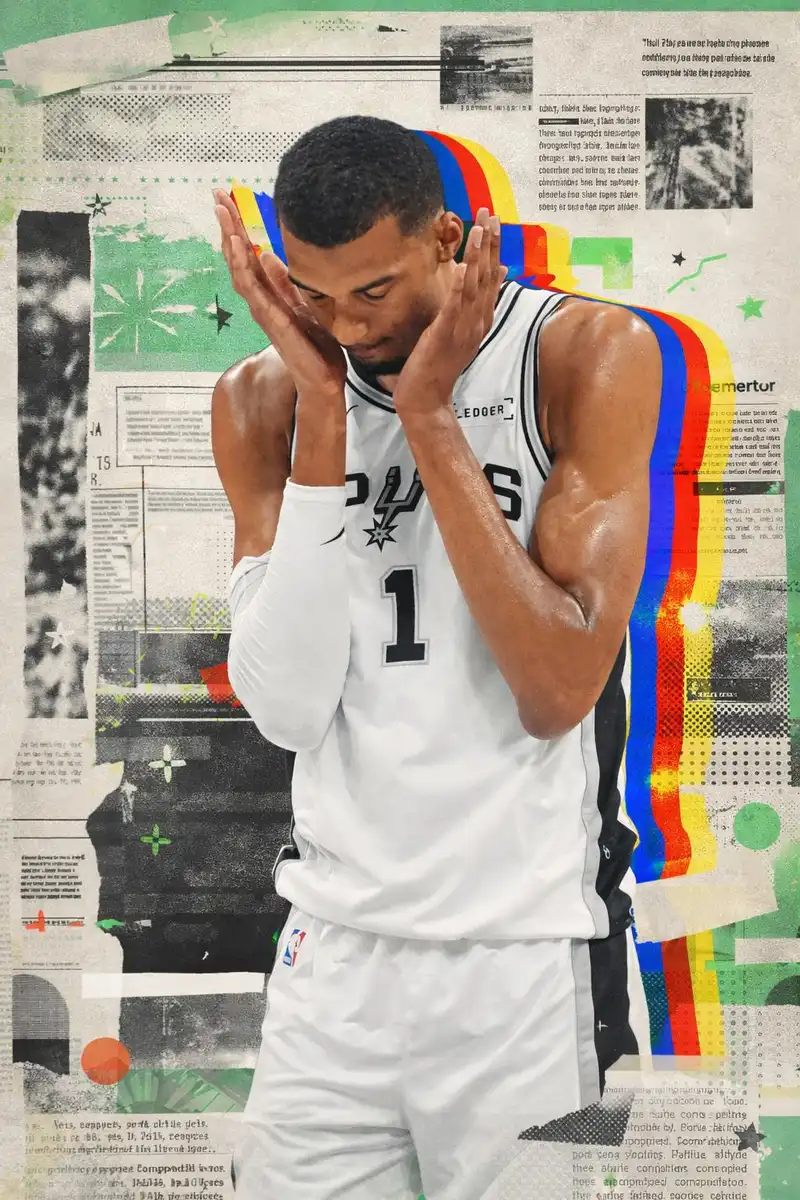
Wembanyama is the latest example. On Tuesday, after playing 64 games, he injured his ribs. The San Antonio Spurs say it is not serious, but it is still unclear whether he will return right away. He needs just 20 more minutes in one game to remain eligible for MVP consideration, and also for Defensive Player of the Year, a prize he now looks close to winning.
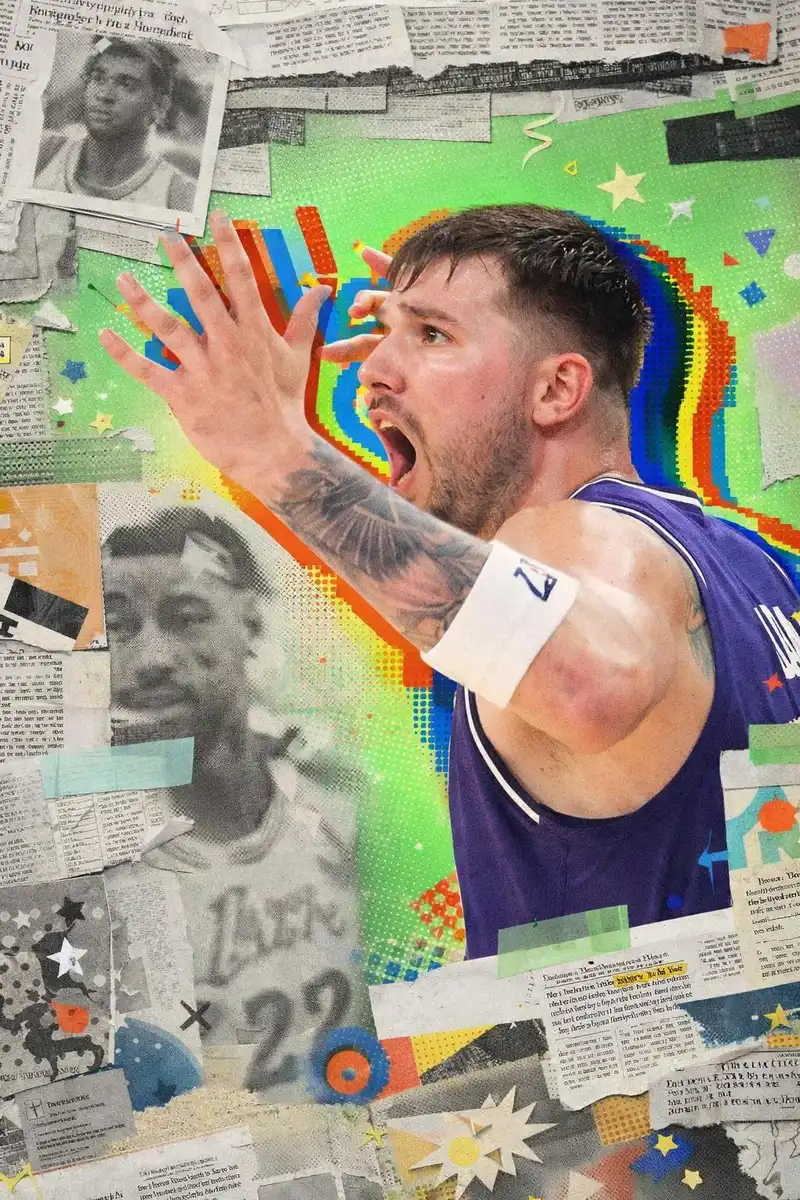
Doncic has been even less fortunate. His regular season ended on Friday at 64 games because of a hamstring injury, which is a much more serious problem. Even though he has been brilliant, leading the league in scoring on a per-game basis, he will not be able to compete for MVP unless his appeal succeeds.
His agent has asked for a “deroga per circostanze eccezionali,” or special exemption under NBA rules, arguing that some of Doncic’s missed games were caused by injuries and by the birth of his daughter.
Cade Cunningham’s agent is making a similar push. The Detroit Pistons star is stuck at 61 games after suffering a collapsed lung.
So, yes, the NBA’s awards ceremony may be heading toward a problem, maybe even a small disaster. And because these awards also affect salaries, the league risks making them matter less at the exact moment it wants them to matter more. A classic administrative success story, really.