Lunch, memory, and an avocado that started a conversation
I will spare you the slow build. At Sam’s, Gavin Newsom finally took a bite of avocado. He laughed about it, and told the story that launched his political legend: when he was acting governor he once declared the avocado California’s state fruit while Gov. Jerry Brown was out of state. Not exactly constitutional law, but definitely memorable.
Sam’s is not just a restaurant for Newsom. It is a place threaded through his family story. His father and grandfather worked the political backstage here. Politics helped wreck his parents’ marriage and then, in a way, helped him reconnect with his father after he won office where his father could not. All of that, Newsom says, shaped how he thinks about running for president and whether his wife and four children would approve.
The book and the long look back
Newsom spent five years writing Young Man in a Hurry: A Memoir of Discovery. He told me he used that time to dig into his family and to figure out how the parts of his life fit together: privilege and grit, Pacific Heights and a single mother who worked multiple jobs. He wants the record straight about both sides.
His pitch: he is both from a world of connections and a world shaped by a hardworking mother. He says he has often felt like an imposter in the wealthy circles he encountered, and that the real anchor for him was the sacrifice and toughness of his mom.
Why the book took so long
- He had to research family history and reconcile stories.
- He wanted to be honest about successes, failures, doubts and anxieties.
- Writing it helped him let go of performances and masks he used to wear.
Where he stands politically
Ask Newsom whether he is a progressive or a moderate and he will sidestep neat labels. He says he is pro-business and pro-jobs, and that progressivism should include fiscal discipline. He points to concrete actions he associates with his record:
- Expanded health care access and related policies delivered in California.
- Higher wages for healthcare and fast food workers.
- Balanced budgets and support for progressive taxation while rejecting wasteful spending.
His argument is straightforward. You can be for growth and inclusion at the same time. He says political commentators make the public believe people fit tidy boxes, while most voters live with nuance.
2028: the family veto
Everyone around him assumes he is running for president. Newsom is blunt that the decision is not purely personal. His four children and his wife, Jen, have a real role. He told a small story that mattered to him: his 14-year-old son privately messaging that he did not want his dad to run, because the family needs him home more. That, Newsom said, was a bolt of reality.
He also said the public has a veto in a different sense. To run, you need a compelling reason to add value beyond other candidates. He is not hiding the question. He says it will unfold and that the family’s judgment is central.
On Donald Trump: from conversation to conflict
Newsom has known Trump for years. They worked together after the Paradise wildfire and during the early Covid years. He recalls sitting with Trump in the Oval Office and later a brief encounter at Davos where Trump tried to coach and charm him.
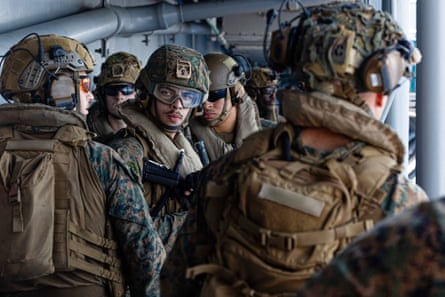
But Newsom’s tone darkens when he describes Trump now. He calls him increasingly unmoored and dangerous. He pointed to a moment when Trump, after a conversation, tweeted about federalizing the National Guard and the next day 700 active duty Marines were sent to Los Angeles. For Newsom, that was a turning point.
He also says Democrats need to change tactics. He used a blunt phrase: fight fire with fire. He admits it is imperfect language, but he worries Democrats are trying to be morally pure while the other side is ruthless. If Democrats do not get aggressive enough to win back the House, he warned, the fairness of future elections could be at risk.
Do labels like "Democratic Trump" bother him?
Newsom laughed and said he does not take offense from colleagues who warn against copying Trump’s methods. He admires some rivals personally, like Maryland Governor Wes Moore. But his point is practical: in a moment he sees as an assault on institutions, he believes tactical toughness is necessary.
On Israel and language he regrets
Newsom said he “reveres” the state of Israel and supports its security. He is strongly critical of Prime Minister Benjamin Netanyahu and of the Israeli far-right’s approach to the West Bank and the two-state solution.
He said he regretted using the word apartheid to describe Israel in the context he had in mind. He clarified that his concern is about a possible direction, not a blanket label for the current state. He said that if full annexation of the West Bank happened, the language others use could change.
Foreign policy quick takes
- Cuba: he noted the United States has tried many approaches for decades. He praised any pragmatic shifts that produce results, like recent prisoner releases tied to diplomatic moves.
- Taiwan: he supports the long standing U.S. posture of strategic ambiguity. He also stressed that Taiwan matters for supply chains and innovation, and is concerned about strategic competition with China.
- Green energy and electric vehicles: he framed these as matters of economic power and national security, not only environmental policy. He worries the U.S. is ceding ground to China.
San Francisco: his city and its contradictions
He refused to run from San Francisco’s image. Yes, the city is often reduced to tech bros and Pacific Heights, but Newsom described a grittier history: unions, docks, immigrant neighborhoods. He celebrates the city as a place of entrepreneurialism, innovation and scientific achievement. He called it part of the American and California dreams.
At the end of our conversation, former mayor Willie Brown chimed in with the kind of roast that happens in Sam’s booths. The verdict was classic Sam’s: if he runs, he should win.
Final note
This conversation, spread across seafood, sourdough and reluctant avocado, showed Newsom as a politician who is thoughtful about family, stubborn about policy, and increasingly worried about the threats he sees to democratic norms. He will decide whether to run in 2028 with his family, his past and his view of what the country needs next all in mind.