The conflict involving Iran and the blockade in the Strait of Hormuz has driven oil prices sharply higher and forced governments to tap emergency reserves. The big question now is how long prices stay up and how deep the fallout will be.
What United is planning
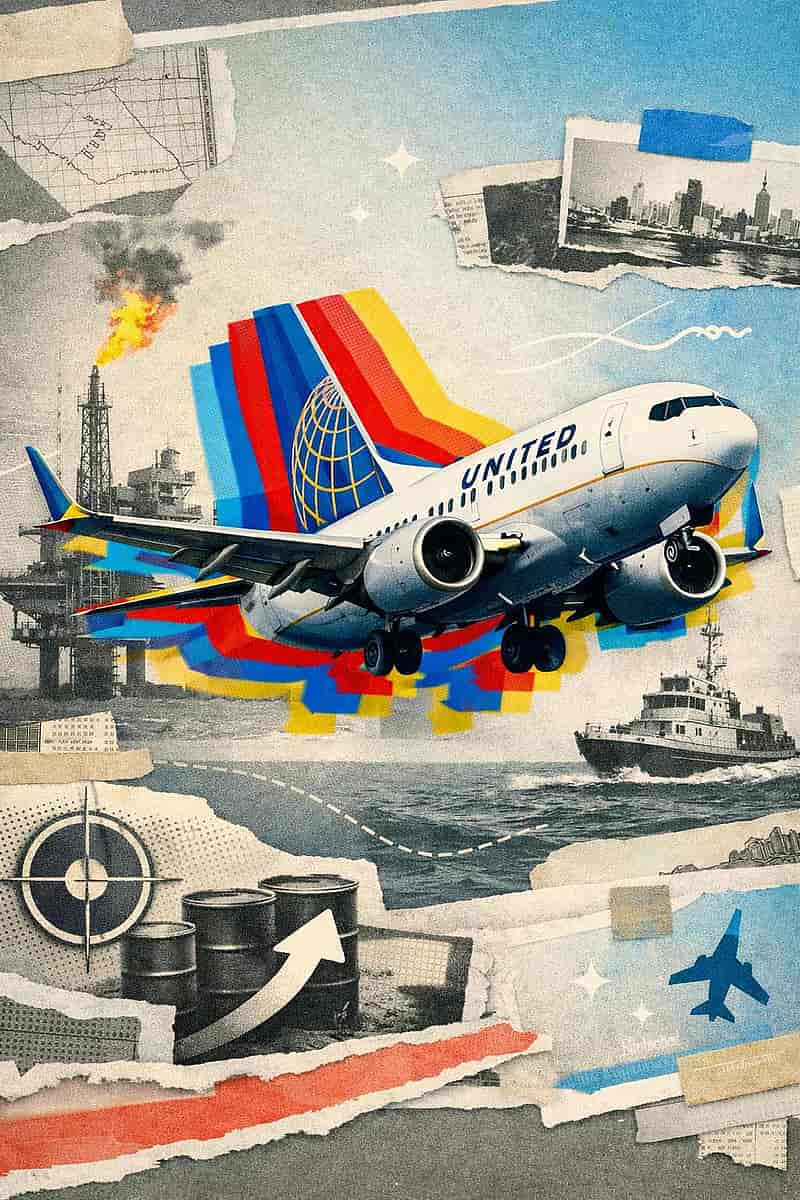
United Airlines CEO Scott Kirby sent a memo to staff laying out a worst-case plan. The airline is modeling a scenario where oil reaches $175 per barrel and does not fall back under $100 per barrel until the end of 2027. That is the timeline United is using to make business decisions.
Because jet fuel is a major cost for airlines, United is taking action now. Jet fuel typically makes up about 25 to 33 percent of an airline's operating costs. Since the war began about four weeks ago, oil prices have roughly doubled from around $70 per barrel.
United will reduce roughly 5 percent of its planned flying in the second and third quarters of this year. The cuts will focus on low-demand slots, including overnight red-eye flights and travel days that tend to be quieter: Tuesdays, Wednesdays, and Saturdays.
Kirby wrote that he thinks the worst case may not happen, but the company needs to be ready anyway.
Why this matters beyond the airports
Analysts say United’s moves are a useful signal for the wider economy. Airlines use a lot of refined oil, more than most industries. According to supply chain research, air transportation is one of the top U.S. industries in terms of the share of non-labor costs spent on refined petroleum products, trailing only asphalt paving.
Jason Miller, a supply chain professor at Michigan State University, notes that this energy shock comes at a bad time. With a soft job market and global trade tensions, sustained high energy prices raise the odds of broader economic pain. He also pointed out that the situation in the Strait of Hormuz may not resolve quickly.
How other carriers are reacting
- American Airlines reports it has already spent an additional $400 million on fuel costs recently.
- Several carriers say demand for travel has remained strong in recent weeks. United reported its best 10-week run ever for booking revenue.
- Executives warn it is unclear whether that demand is long-term or simply passengers booking early to avoid future price spikes.
American’s CEO Robert Isom said the airline will be flexible with capacity if high oil prices persist, adjusting schedules so supply and demand stay in balance.
How long can this drag on?
Industry experts say the real harm depends on the length of the uncertainty. Ahmed Abdelghany, who studies airline operations, says the longer the situation lasts, the more difficult it becomes for airlines to manage costs and schedules. Extended uncertainty raises the chance of wider disruptions, and it takes time to unwind the changes airlines make.
Bottom line: If oil stays high for months or years, travelers should expect some fewer flights on off-peak days, more nimble scheduling from airlines, and continued pressure on ticket prices. For now, carriers are preparing for a long, costly stretch rather than assuming a quick fix.