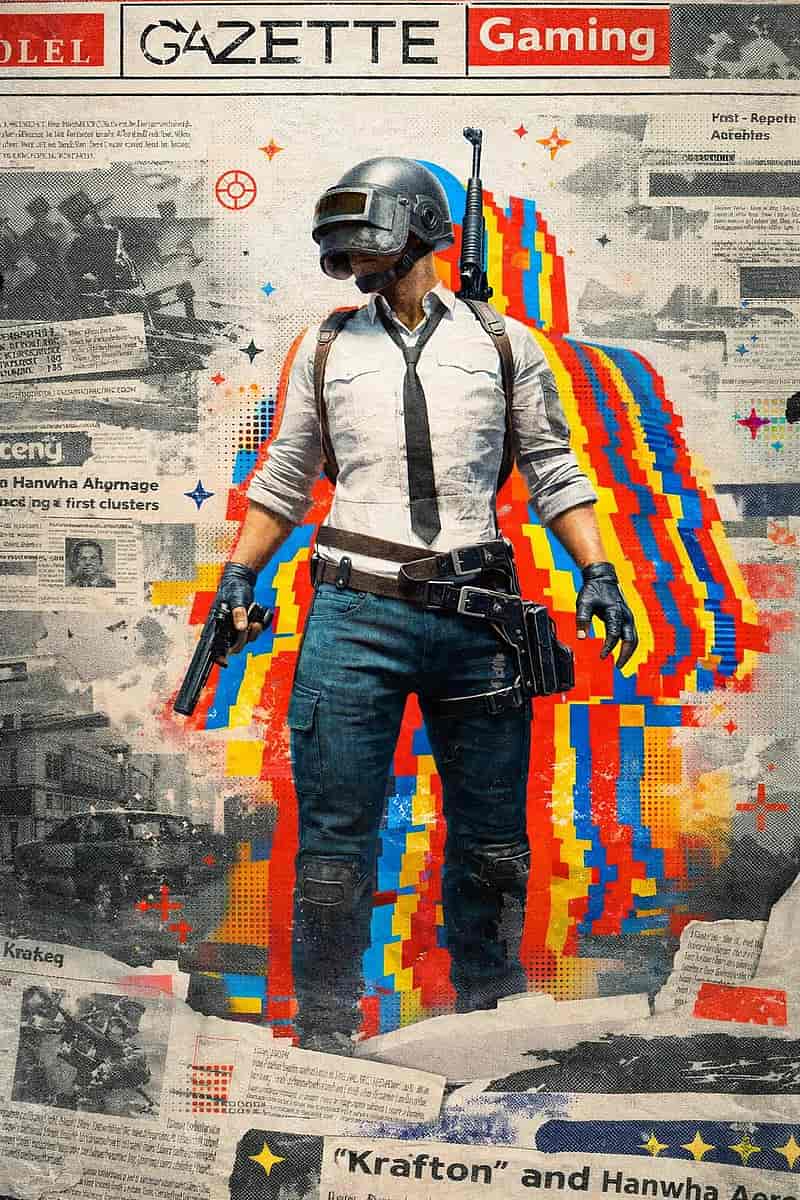
Krafton, the studio best known for PUBG, is making a sharp turn away from only making games and toward building real-world AI and defense tech. The company has signed a strategic alliance with Hanwha Aerospace that includes investment support of up to $1 billion to expand what they call a "physical AI" ecosystem.
What the deal covers
Short version: this is not just a marketing partnership. The companies say they will work on developing and commercializing technology across multiple areas, and defense is explicitly on the list. The announcement highlights ambitions to move agentic AI out of the lab and into hardware and fielded systems.
Key points
- Strategic partner: Krafton and Hanwha Aerospace have signed an alliance and included investment provisions that could reach up to $1 billion.
- Focus: Build and scale a "physical AI" ecosystem, meaning AI tied to robots, vehicles, sensors, and other hardware rather than only software experiments.
- Defense on the agenda: The statement explicitly references defense as one of the sectors targeted for development and commercialization.
Why AI-first matters
Krafton announced plans to be an AI-first company in 2025. As part of that pivot it committed about $70 million for a GPU cluster meant to accelerate work on agentic AI. Agentic AI, in plain terms, refers to systems that can take a goal and act toward it with a degree of autonomy. That is, you give them a task and they try to accomplish it without step-by-step human control.
Real-world implications
When you combine agentic AI with hardware and defense customers, you start moving into territory that raises obvious questions about safety, oversight, and rules of engagement. Krafton and Hanwha frame this as building useful systems and new commercial opportunities. Skeptics will point out that the same technology can be used for weapons or other military systems.
People and optics
Krafton CAIO Kangwook Lee, who is also CTO of a U.S.-based robotics lab called Ludo Robotics, has been public about the team s technical progress. A recent post highlighted a project called Terminus KIRA and showed results on a benchmark labeled terminal-bench, reporting a 74.8 percent score. That kind of technical bragging illustrates the company s shift toward measurable, field-oriented AI work.
Krafton CEO Kim Chang-han has said he expects the partnership could help make Krafton into a global defense technology company akin to some existing autonomous-systems firms. That statement makes the company s ambitions clear: gaming roots are not where they plan to stop.
Notable context
- Kim has publicly shown enthusiasm for AI in other settings. He has also admitted consulting ChatGPT during a previous corporate dispute, a move that drew attention.
- Krafton has faced legal setbacks over the Subnautica 2 developer situation. A court ordered remedial action in that case, which highlighted management decisions and the limits of legal strategies tied to acquisition earnouts.
This alliance signals that a familiar name from the games industry is now betting heavily on AI that moves and acts in the physical world. That is a major strategic shift with both commercial opportunity and ethical questions attached.