The device that changed the category
If you want to trace modern consumer health tech back to a single product, the trail leads straight to the Apple Watch Series 4.
In 2018, most smartwatches and fitness bands were still living in a pretty small world. They counted steps, tracked heart rate, logged workouts, and maybe offered a bit of sleep monitoring if the software was feeling generous. Useful, sure. Life-changing, not exactly. These were fitness gadgets first and health devices second, which is a polite way of saying they were not the sort of thing people expected to catch a problem before their doctor did.
That changed with the Series 4, which introduced FDA-cleared atrial fibrillation detection. That was a first for any consumer wearable, and it immediately raised the bar for the rest of the market. It also drew predictable skepticism. Critics pointed out that the feature was not the same as a traditional 12-lead EKG, and plenty of doctors were still figuring out what to do with data from a wrist-worn device that had ambitions beyond counting your stairs.
Still, the feature worked as a turning point. Today, FDA-cleared screening tools are a defining trait of what the industry likes to call advanced health tech. The result is a market full of devices that now promise alerts for illness, sleep apnea, hypertension, and even fertility windows. There is also a healthy amount of hand-wringing about health anxiety, but that has not stopped companies from hunting for new biomarkers, better recovery metrics, metabolism data, and apparently anything else they can attach a graph to.
Apple’s view: broad, not niche
As part of a weeklong look back at 50 years of Apple products, the company’s role in shaping this category is hard to ignore. To understand how Apple thinks about health features now, I spoke with Deidre Caldbeck, senior director of Apple Watch and health product marketing.
My own Apple Watch journey started in 2016 with the Series 2, and since then I have tested every model. Apple’s approach has always been clear enough: the Watch is not designed as a specialty gadget for people who already live and breathe health data. It is supposed to be for everyone, which is a much bigger ambition, provided you also own an iPhone.
“We really wanted to make the features on Apple Watch as inclusive and intuitive as possible,” Caldbeck says. “Of course, technologies have advanced, and people’s interest in health and fitness has changed over the years, but we’ve really tried to maintain that primary objective: building features that can really impact as many people as possible.”
That philosophy has shaped the product from the start. Apple’s optical heart rate sensor was originally used mostly for workouts, but as the Watch spread to more wrists, users began asking for more context. They wanted to know whether a strange reading meant anything. They wanted the device to explain itself, which is a reasonable expectation from a product that has decided to concern itself with your pulse.
With the Series 3, Apple added high and low heart rate notifications. Caldbeck says the bigger leap came with the Series 4, which brought a major redesign, a larger display, a more modern interface, and the EKG feature that moved the Watch from fitness tracker toward something more like a health companion.
“We started to hear more from people that they were getting insights into heart rate recovery and we thought, ‘Okay, well, maybe we invest more in things like low-cardio fitness,’” she says, referring to how Apple presents the VO2 max metric. “And of course, aFib notifications were there, but should we do more with aFib history once you’ve been diagnosed with aFib? So that sort of kicked off this acceleration into more of these heart health features.”
Apple’s slow lane in an AI race
That kind of broad, carefully validated health feature is not what most of Apple’s rivals are chasing right now. The broader wearables market is in full sprint toward AI-powered personalization, with Garmin, Google/Fitbit, Samsung, Oura, Whoop, Strava, Withings, Peloton, and others trying to make their platforms feel increasingly individualized. Some of the results are, to put it gently, not great.
The trend has also been shaped by the rise of wellness fads and new consumer habits. As GLP-1 drugs have become more common, metabolic health tracking and AI nutrition features have become hotter than a laptop left in direct sunlight. Garmin launched its own version in January. Even Meta said this week that it plans to get into AI nutrition logging through its smart glasses later this summer.
Apple, meanwhile, has been slower to embrace the whole AI-everything approach, and that has drawn criticism. The company’s Workout Buddy, released last year, is marketed as an AI feature, but it is not really an AI coach in the way many users might expect. It is more of a motivational layer, surfacing milestones and reminding you of progress toward daily goals. It does not build workouts, tell you what to do next, or offer the kind of live guidance that has become standard in some fitness products.
That is not an accident.
“We want to deliver meaningful insights without very specific recommendations,” Caldbeck says. “We have, to date, designed our features to be a little more discreet, to sort of fade in the background and meet you where you are. Of course, we want to notify you if there’s something that you should pay attention to and give you the right information to make the right decisions or to maybe have a conversation with your doctor.”
Apple does use AI inside its health features, including heart rate monitoring, fall detection, and hypertension notifications. But the company says the point is to use those systems to “unlock health insights and empower people with information that they can then take action on.” Another rule, according to Apple, is that every feature has to line up with consensus-based scientific literature. In other words, no improvising just because the dashboard looks empty.
“What’s consistent is our commitment to providing features with actionable insights that are grounded in science and built with privacy at the core,” says Dr. Sumbul Desai, Apple’s vice president of health and fitness.
Why Apple waits
Caldbeck says Apple is always aware of the temptation to jump on whatever wellness trend is getting attention. But the company insists that its products have to be tested across a large population before they are released, in part because its hardware reaches so many people around the world.
That is not a small obligation. Apple’s first Heart Study involved more than 400,000 participants, which was unusually large at the time. When the company evaluates a feature, it looks at factors such as specificity and sensitivity, the measures that help determine whether a test correctly identifies true positives or true negatives.
“Frankly, we’re careful when we roll out these new features because we want to make sure we’re not getting ahead of the science,” Caldbeck says. “Sometimes, we wait a year or two. It does mean that others may be ahead of us in some areas that we know users care about, but it takes discipline, and we’re going to continue to do that.”
That caution is easy to praise in theory and much harder to practice in a market obsessed with moving fast and calling it innovation. Apple, at least, is not pretending otherwise.
Last year, I spoke with Desai about the Apple Health Study, which is notable partly because it has no single narrow goal. Instead, it is built to examine a wide range of topics, including activity, aging, cardiovascular health, circulatory health, cognition, hearing, menstrual health, metabolic health, mobility, neurological health, respiratory health, and sleep.
The study is planned to run for five years, with the possibility of extension. That means the payoff may take a very long time to arrive, and there is no guarantee that the research will lead to a headline-grabbing breakthrough. Science is inconvenient like that. It rarely cares about product launch calendars.
Apple’s newer hypertension notifications, launched last year, show the same pattern. Caldbeck says the company had wanted to build the feature for a long time, but waited until it could produce reliable, validated results at global scale and go through the regulatory clearance process. Apple also published a validation paper based on data from 100,000 study participants, explaining both the technology and the development process.
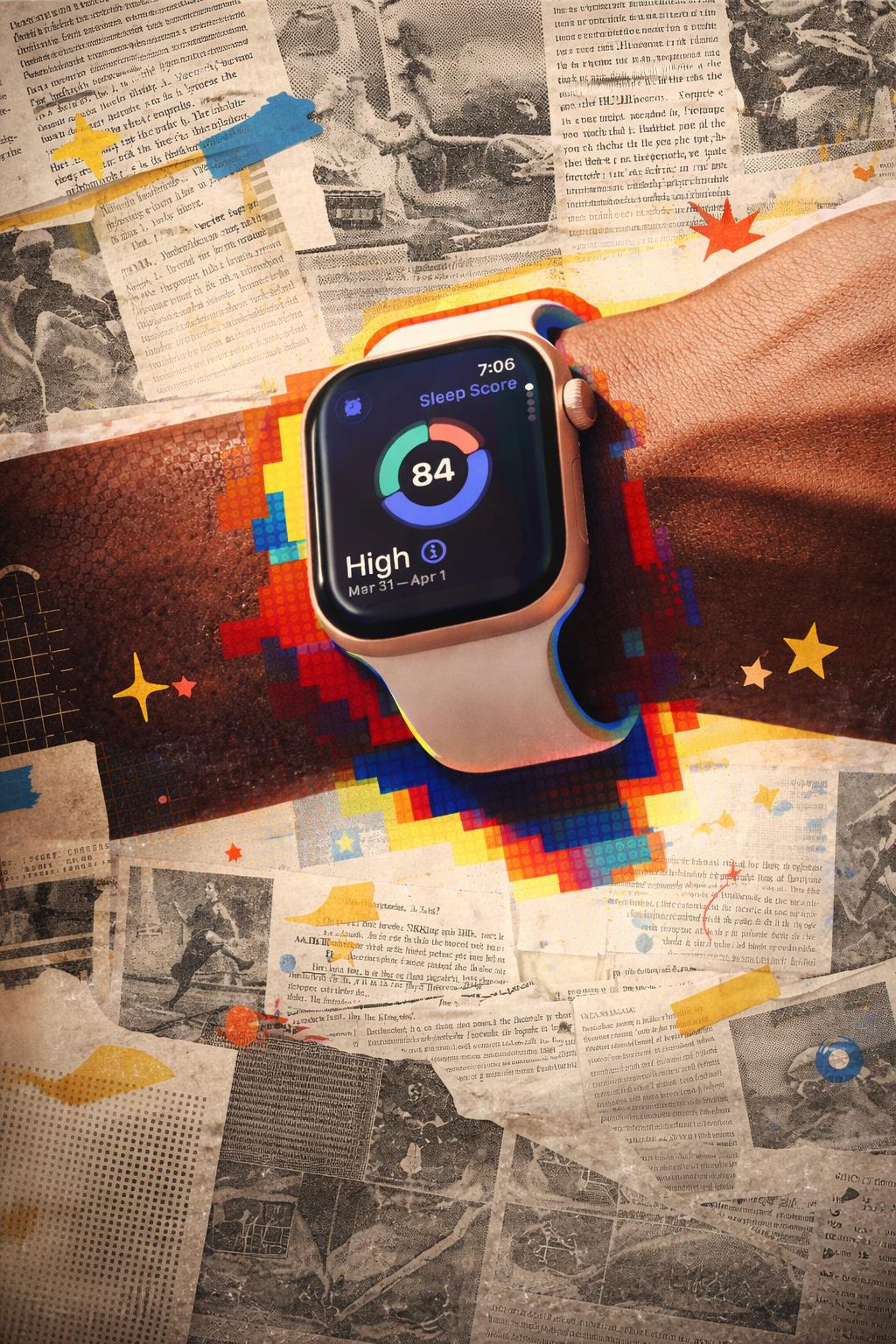
The same logic guided sleep score, which had been available on other devices for years before Apple introduced its version in 2025. Caldbeck says Apple delayed the feature because it wanted scientific consistency. It also chose not to lean too heavily on biometrics, instead emphasizing factors users can actually influence.
Health tech beyond the wrist
Apple may be cautious, but it is not standing still. Caldbeck and Desai both say the company expects health features to spread across more of its devices, not just the Watch.
“We’re focused on creating innovative, intelligent features that deliver personal insights through products like Apple Watch, AirPods, and iPhone, fundamentally evolving the concept of prevention by democratizing access to health information,” Desai says.
Caldbeck points to hearing health features in AirPods and older mobility tracking work on the iPhone as examples of where Apple sees room to grow.
“If you think about what we’ve done with hearing health with AirPods, and even what we did years ago with using your iPhone to track mobility metrics, there’s a lot that we can still do with devices that are with you every day,” she says. “That’s going to be a place that we’ll continue to invest in to bring more impact to more people across more of our products.”
The bigger question
In health tech, there is a widening gap between two philosophies. One side is moving quickly, layering AI on top of wellness trends and hoping the personalization lands before the science catches up. The other side, led by Apple, is slower, broader, and far more insistent on clinical validation before it ships.
That slower route can look dull from the outside, especially when another company gets there first and the internet starts acting like that settles the matter forever. But Apple can afford patience in a way most rivals cannot. It has the scale, the installed base, and the money to wait for the science instead of merely borrowing its tone.
Whether that approach ultimately wins is still an open question. What is not in doubt is that the Apple Watch Series 4 changed the category, and the rest of the industry has been living in its wake ever since.